Discover
-
Manuel São Bento October 13, 2025 at 10:33 pm by Manuel São Bento
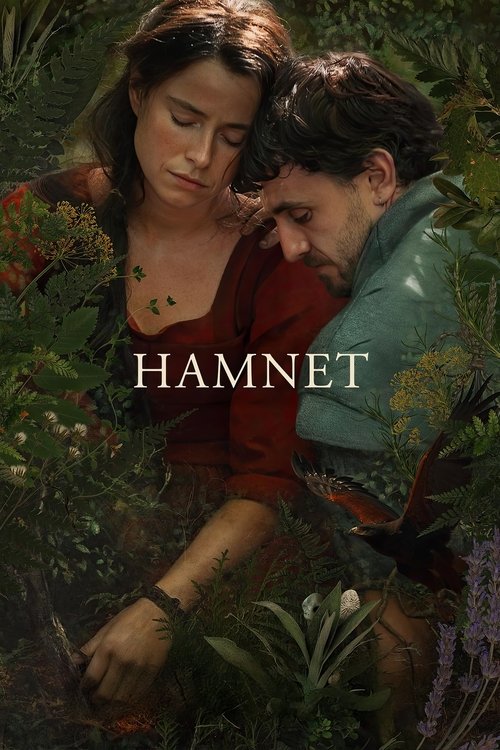
FULL SPOILER-FREE REVIEW @ https://fandomwire.com/hamnet-review/ "Hamnet is a true work of art that, despite its slow march and some more challenging moments for the uninitiated, rewards perseverance. It's a film about how pain destroys, but also about the miracle of how art can serve as a vessel for redemption or, at least, for understanding. Chloé Zhao took an empty space in history — the life of a forgotten woman and the silence of a lost son — and filled it with an emotion that's, ultimately, a testament to the power of creation. It's proof that the greatest tragedy in literature was, in fact, born from the greatest possible act of family love and memory." Rating: A-
-
Brent Marchant November 18, 2025 at 9:27 am by Brent Marchant
William Shakespeare is widely regarded as the greatest writer in the English language, though there’s some disagreement about whether he actually wrote the materials attributed to him. Even sketchier than this are some of the details about his personal life, aspects of his character that have been the subject of much conjecture, especially where they may have influenced his literary undertakings. And an examination of that nexus is where this latest offering from writer-director Chloé Zhao makes its appearance on the stage (or, in this case, the screen). Based on the best-selling speculative novel Hamnet by Maggie O’Farrell (who co-wrote the screenplay with Zhao), the film presents a fictional take on how the Bard’s most noteworthy work, the quintessential theatrical tragedy, Hamlet, came into being. Essentially, the narrative maintains that the stage play (which, in Shakespeare’s time, used the names “Hamlet” and “Hamnet” interchangeably) came about as a grief/coping response after the author (Paul Mescal) and his wife, Agnes (Jessie Buckley), lost their young son, Hamnet (Jacobi Jupe), to “the pestilence” (assumed to be bubonic plague). It’s presumed that the tragic but heroic Hamlet is a fictional homage to Shakespeare’s courageous, honorable but ill-fated real life progeny (though, admittedly, it’s something of a stretch to understand what connection an 11-year-old boy from rural England might have to a prince of the Danish royal family). Bringing the play to life often led to marital discord between Will and Agnes, given that he was working on the production in London while she maintained the family household in Stratford-on-Avon. And, all the while, the couple struggled to come to terms with their feelings of loss, something that Shakespeare hoped to resolve by creating this latest work. As noble as this sentiment might be (and as truly effectively as it’s addressed in the picture’s closing 15 minutes), the overall execution otherwise leaves much to be desired. To its credit, “Hamnet” features superb performances (particularly by Buckley and Noah Jupe as Hamlet, though Mescal comes across as a bit hammy at times), along with a fine score, stunning visuals and an excellent period piece production design. But, even with all these assets in its favor, this release is sorely in need of editing and a better script, one with fewer repetitious and incongruent elements (most notably the clumsy integration of original Shakespearean on-stage dialog with contemporary off-stage exchanges). These shortcomings, regrettably, make for an often-dull tale, one that prompted a number of viewers at the screening I attended to start nodding off – literally. What’s more, the screenplay would appear to assume that most audience members have an intimate familiarity with both the minutiae of the play and the details of Shakespeare’s biography, inferences that ask an awful lot of viewers upon entering the theater. Indeed, when all is said and done, “Hamnet” truly is a major disappointment, an unapologetic example of Oscar bait, a picture that holds itself in bloated esteem simply because of its lofty attributes and subject matter. But that kind of unrepentant cinematic preening has grown tiresome over time, even though it’s a formula that this filmmaker never shies away from employing in her productions – and this offering, unfortunately, is once again no exception.
-
CinemaSerf December 11, 2025 at 11:28 am by CinemaSerf
Maggie O’Farrell said at this screening that adapting her novel for the screen was akin to watching the sand flow through an hour glass. She started with something extensive, whittled it down to 90-odd pages and then gave it to a director (Chloé Zhao) who frilled it all out again to make a couple of hours for the screen that is somewhat different from the original. I reckon that’s the perfect way to describe just how this story of a part of Shakespeare's life comes across, and at last - I have seen something from Paul Mescal that isn’t just hype. He is the bard, before he was the bard. He taught Latin to uninterested children so he could pay of his father’s debt, and was bored. Then he encounters “Agnes” (Jessie Buckley) and it’s love at first sight - despite some family reservations. After the birth of their first child, he concludes that he can make a better living in London and so heads off in best Dick Whittington style to make his fortune. He finds writing work with some theatrical players, and from now on divides his time between his wife in Warwickshire and his increasingly successful career. Then come the twins, “Judith” and “Hamnet”. Both parents understand the necessity of his being away, but their children - upon whom they both dote - miss their father, and when the plague visits their town a tragedy ensues. Devastated, the couple must deal with this in their own way, and it’s the premise of the novel that it was this grief that inspired Shakespeare to write his “Hamlet”. You can tell that loads of research has gone into this project, and from the production design through to the last twenty minutes in which this most famous of plays is presented in an abridged fashion, the film is engaging, entertaining and really quite a poignant exponent of sixteenth century English life. Mescal’s portrayal starts off with a glint in his eye, but as the plot thickens his character displays a depth to it that mixes joy, frustration and remorse in what I think is his best effort yet. On the other side of this coin, we have a Buckley who has come a long way since I first saw her in “Wild Rose” (2018). Her efforts here border on the visceral, especially when childbearing and parenting. Both Joe Alwyn and Emily Watson add some gravitas as brother and mother, respectively, and not for the first time in their careers, both Jacobi and Noah Jupe stand out, the latter quite literally bringing the house down at the end. Speculative? Well of course it is, but it's still a story that pulls at the heart strings, and leaves precious little room for sentimentality at a time in history when mortality was all too often writ large for all, rich or poor. A love story, a grief story and what’s also rewarding is that we don’t get a rose-tinted conclusion, either. You don’t need to be a period drama fan, nor a lover of complex and wordy prose, to enjoy this. It’s some people at the top of their craft delivering really quite compellingly a story that’s just as relatable now.
-
Horseface March 8, 2026 at 6:06 pm by Horseface
I was trying to order a cheeseburger, but the clerk couldn't hear me, because Carmina Burana was playing too loudly. Then the guy next to me started crying, because the final scene from Godfather III was playing on the scene next to the clerk. Then the woman on my other side starting crying, and the the clerk, too. Then Maggie laughed. She's such a little angel. Anyway, the clerk must've figured out what I was gesturing for, because I got my burger, with extra cheese.
-
Sierbahnn June 15, 2026 at 8:00 am by Sierbahnn
Atmospheric, heartwrenching, and dark. This is not 'Shakespeare in Love'. This is the tragedy of the bard, even though we know that historically he was not quite that good of a husband to his wife. The movie is more about the indominability of spirit of Anna and the sorrows she faced in her life, with her children, family, strife and death. The movie is beautiful, dark and soulcrushing, in a way. The casting is good, the direction outstanding and the presentation lovely. If you want to get emotionally devastated then this is for you.
-
Marco-Hugo Landeta Vacas October 18, 2026 at 11:36 am by Marco-Hugo Landeta Vacas
(CASTELLANO) Una tragedia íntima que acaba convirtiéndose en duelo compartido Me destrozó. Entré ya con algo ganado por Paul Mescal, desde Normal People y sobre todo Aftersun, pero lo que terminó atravesándome fue Agnes, Hamnet, la ausencia de William y esa idea brutal de que el dolor puede vivirse de formas incompatibles aunque nazca del mismo amor. Al principio ya se nota que no va a ser una película ligera. Agnes me dio una pena enorme desde muy pronto, porque todo parece caerle encima: los niños, el miedo, la soledad, la vida doméstica, la incertidumbre y un marido que está en Londres, lejos, incluso cuando emocionalmente debería estar allí. Jessie Buckley está impresionante. Tiene una presencia física y expresiva que parece hecha para un personaje como este: terrenal, intuitiva, frágil y fuerte a la vez. No interpreta el dolor como una pose bonita, sino como algo que atraviesa el cuerpo entero. El miedo por sus hijos, la rabia, la ternura, el agotamiento y luego el vacío son casi palpables. Paul Mescal también está muy bien, porque no convierte a William en un villano simple. Te puedes enfadar con él, y yo me enfadé, porque Hamnet muere y él no está, y después vuelve a irse a Londres como si la vida siguiera allí. Pero la película va dejando claro que su forma de huir también nace del dolor. No sabe quedarse. No sabe sostener la pérdida dentro de la casa. Y cuando vemos la habitación minúscula en la que vive en Londres, esa ausencia se vuelve más compleja: no está huyendo hacia el lujo, está sobreviviendo como puede. La muerte de Hamnet es horrible. Horrible de verdad. La película primero te da ese instante precioso, casi milagroso, con la niña, un momento de alivio tan bonito que te agarras a él con todas tus fuerzas. Y luego llega el golpe. Que muera el niño, con Agnes casi sola ante lo imposible, vuelve la película devastadora sin subrayar demasiado. Lo que más me gusta es que entiende el duelo como algo físico y doméstico. No es solo llorar; es seguir viviendo en los mismos espacios, tocar las mismas cosas, mirar las camas, escuchar los silencios, convivir con la ausencia. Agnes se queda con el cuerpo del dolor. William, en cambio, lo transforma en teatro. Esa diferencia podría separarlos para siempre, pero también prepara la escena más poderosa de la película. Y esa representación final de Hamlet me pareció bestial. Cuando Agnes ve la obra, cuando entiende que William no había olvidado a Hamnet sino que lo había escondido en el arte, la película alcanza una emoción enorme. En ese momento, para Agnes y para nosotros, el teatro se convierte en una forma de duelo. La escena en la que el actor que hace de Hamlet busca las manos, y Agnes también le coge la mano, y el público se acerca, llora y comparte ese dolor, me rompió. Ahí la película hace algo precioso: convierte una tragedia privada en una comunión colectiva. Ya no lloran solo unos padres a su hijo. Lo llora una sala entera. Lo llora el teatro. Lo llora el arte. Y ese cruce de miradas entre Agnes y William es demoledor, porque por fin se entienden. La música ayuda muchísimo. Empuja la escena hasta un lugar emocional casi insoportable, pero la película se ha ganado ese crescendo. Todo lo anterior, la enfermedad, la ausencia, la distancia, la rabia y la incomprensión, desemboca ahí. Por eso no sentí manipulación, sino catarsis. Lloré porque la película me llevó hasta ese punto con verdad. También me gustó que ponga a Agnes en el centro. No es "la mujer de Shakespeare" como sombra decorativa, sino el corazón de la historia. La película mira la creación de Hamlet desde el lado de quien perdió a un hijo en la casa, desde quien sostuvo la vida cuando el genio estaba lejos. Esa perspectiva femenina y familiar le da una fuerza enorme. Puede tener algo de película de prestigio, claro, y se nota que busca una emoción grande. Pero cuando una película te hace llorar así, cuando una escena final te deja sin defensa y encima sientes que todo encaja con lo vivido antes, discutir si está calculada me importa menos. A mí me funcionó por completo. Al final, para mí es un 10. Por Jessie Buckley, por Paul Mescal, por la tristeza inmensa de Agnes, por la muerte de Hamnet, por la manera en que William convierte su dolor en una obra, y por esa representación final que transforma el teatro en memoria compartida. Me pareció una película preciosa, horrible, catártica y devastadora. De las que duelen, pero también explican por qué el cine y el arte importan tanto. (ENGLISH) An intimate tragedy that becomes shared grief It destroyed me. I already went in partly won over by Paul Mescal, from Normal People and above all Aftersun, but what ended up piercing me was Agnes, Hamnet, William's absence and that brutal idea that grief can be lived in incompatible ways even when it is born from the same love. From the beginning, you can feel this is not going to be a light film. I felt enormous pity for Agnes very early on, because everything seems to fall on her: the children, fear, loneliness, domestic life, uncertainty and a husband who is in London, far away, even when emotionally he should be there. Jessie Buckley is extraordinary. She has a physical and expressive presence that seems made for a character like this: earthy, intuitive, fragile and strong at the same time. She does not play pain as a pretty pose, but as something that crosses the whole body. Fear for her children, rage, tenderness, exhaustion and then emptiness become almost palpable. Paul Mescal is also very good, because he does not turn William into a simple villain. You can get angry with him, and I did, because Hamnet dies and he is not there, and then he goes back to London as if life continued there. But the film gradually makes clear that his way of running away also comes from pain. He does not know how to stay. He does not know how to hold loss inside the house. And when we see the tiny room where he lives in London, that absence becomes more complex: he is not fleeing into luxury, he is surviving as best he can. Hamnet's death is horrible. Truly horrible. The film first gives you that precious, almost miraculous instant with the girl, a moment of relief so beautiful that you cling to it with all your strength. And then the blow arrives. The boy dies, with Agnes almost alone before the impossible, and the film becomes devastating without needing to underline too much. What I like most is that it understands grief as something physical and domestic. It is not only crying; it is continuing to live in the same spaces, touching the same things, looking at the beds, hearing the silences, living with absence. Agnes stays with the body of pain. William, instead, transforms it into theatre. That difference could separate them forever, but it also prepares the most powerful scene in the film. And that final performance of Hamlet seemed incredible to me. When Agnes sees the play, when she understands that William had not forgotten Hamnet but had hidden him inside art, the film reaches enormous emotion. In that moment, for Agnes and for us, theatre becomes a form of mourning. The scene where the actor playing Hamlet searches for hands, and Agnes also takes his hand, and the audience moves closer, cries and shares that pain, broke me. There the film does something beautiful: it turns a private tragedy into a collective communion. It is no longer only two parents mourning their son. A whole room mourns him. Theatre mourns him. Art mourns him. And that exchange of looks between Agnes and William is devastating, because they finally understand each other. The music helps enormously. It pushes the scene into an almost unbearable emotional place, but the film has earned that crescendo. Everything before it, the illness, the absence, the distance, the rage and the misunderstanding, flows into that moment. That is why I did not feel manipulation, but catharsis. I cried because the film took me there truthfully. I also liked that it places Agnes at the center. She is not "Shakespeare's wife" as a decorative shadow, but the heart of the story. The film looks at the creation of Hamlet from the side of the person who lost a child in the house, from the person who held life together while the genius was away. That female and family perspective gives it enormous strength. It may have something of a prestige film, of course, and it is clear that it seeks a large emotion. But when a film makes you cry like that, when a final scene leaves you defenseless and you also feel that everything fits with what came before, arguing about whether it is calculated matters less to me. It worked completely for me. In the end, for me it is a 10. For Jessie Buckley, for Paul Mescal, for Agnes's immense sadness, for Hamnet's death, for the way William turns his pain into a work of art, and for that final performance that transforms theatre into shared memory. It seemed to me a beautiful, horrible, cathartic and devastating film. One of those that hurt, but also explain why cinema and art matter so much.