Discover
-
Brent Marchant July 4, 2026 at 1:49 am by Brent Marchant
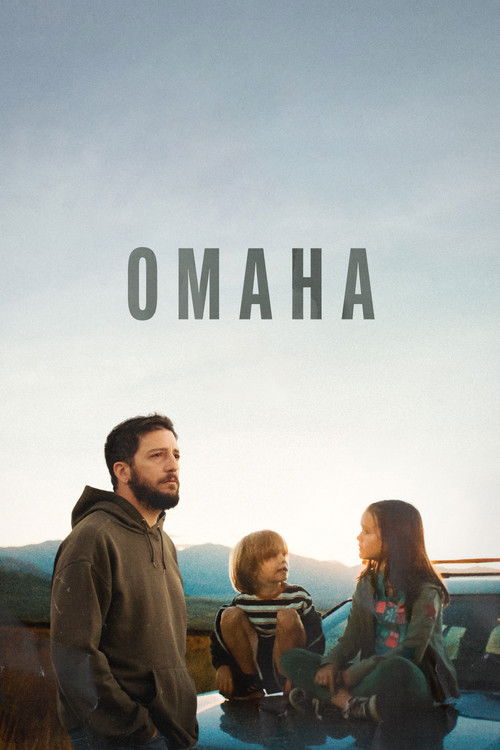
When a film struggles to prematurely avoid playing spoiler, it can be quite an arduous task for a filmmaker to pull off successfully. Fortunately, there are times when directors achieve this accomplishment brilliantly. At the same time, however, there are occasions when keeping a lid on important revelations can be so challenging that a film ends up becoming cryptic or needlessly enigmatic, leaving viewers feeling like they’ve been unduly strung along. And that’s one outcome to which filmmaker Cole Webley comes perilously close to fulfilling in his otherwise-engrossing debut feature. In 2008, at the height of the nation’s economic crisis, a financially strapped single father (John Magaro) faces foreclosure on his Utah home. With his back against the wall, he decides early one morning to hurriedly pack up his family – nine-year-old Ella (Molly Belle Wright), six-year-old Charlie (Wyatt Solis) and the family dog, Rex – and head out on a road trip to an undisclosed destination. Needless to say, the children are perplexed by the hasty, unexpected move, so, when they press Dad about it, he curtly tells them that they’re travelling to Nebraska, without any further elaboration. Saying much more at this point would reveal too much about the film, but suffice it to say that it chronicles their cross-country journey, with all its ups and downs. Little is said about how the family got into these circumstances, but one thing is clear: Dad dearly loves and cares for his kids, and he does all he can to comfort them and to shield them from the harshness of the reality that has befallen them. (It’s a narrative not unlike what’s been seen before in such other single-parent stories as “The Pursuit of Happyness” (2005), “Grace is Gone” (2007), “Kramer vs. Kramer” (1979), “Biutiful” (2010), “Signs” (2012) and “Rebuilding” (2025), to name a few.) Once in Omaha, though, matters become clearer, although the full impact of this story’s significance isn’t revealed until an explanation is provided by way of electronic graphics inserted before the closing credits roll (better late than never, I guess). It’s at that point that viewers finally begin to understand why the filmmaker has been so deliberately evasive in the way the picture has unfolded. And I can appreciate why the director approached telling the story in this manner, but the question that came out of this for me is, “Was the wait worth it?” The answer to that, of course, depends on the sensibilities of individual viewers. As for me, I was on the fence – sufficiently moved, but did I really have to work as hard as I did to let my feelings surface? I would have preferred that they emerged a little less effortlessly and a little more naturally than having to rely on an 11th hour “a ha!” moment. A few hints along the way and a more complete back story would have gone a long way to bolstering the narrative and its message. Mind you, however, this shortcoming is not meant to denigrate the film’s many other fine qualities – its excellent performances (especially from the young actors), its superb character development and its solid chemistry among members of the ensemble. It also makes an impassioned plea for empathy, a serious need for fixing a broken system and an initiative to restore faith in the validity of the American Dream – all qualities and concepts on the verge of abandonment, fitting metaphors for the themes raised in this story. But, while this domestic drama does a more than adequate job of addressing the foregoing issues, it truly could have spent a little less time on well-intentioned but diverting soft-pedalled nuance and more on a deeper exploration of this offering’s core subject matter. Kid gloves and sensitivity are one thing, but when they overshadow what really matters most, the impact can become lost, as it nearly does here. “Omaha” is by no means a bad film, but it’s one where it’s easy to see how viewers might come away from it having expected more than it delivers.
-
The Fixate & Binge Podcast, w/ Joe Curdy July 29, 2026 at 6:01 pm by The Fixate & Binge Podcast, w/ Joe Curdy
Because of **AFTERSUN**, I thought I was more than prepared to watch a film about a struggling, single father *in extremis*. I could not have been more wrong. In his feature film directorial debut, director Cole Webley’s **OMAHA**, written by Robert Machoian, is a slow and bittersweet story told on the road, as a single father—played with tremendous emotional restraint and nuance by John Magaro of **PAST LIVES**—walks out of his home with his two young children, their dog, and sets off on a seemingly spontaneous road trip to Nebraska. His children include 10-year-old Ella (Molly Belle Wright) and six-year-old Charlie (played by newcomer Wyatt Solis). As the father’s diminished amenities for the trip begin to reveal themselves to the children, the weight of what Magaro’s father is carrying on the road comes into greater focus. Your heart will break because of his decision, and the genuine performances from the children, Belle Wright and Solis, will have you reaching for the tissue box over and over again. Few films succeed in capturing the crucible single fathers face while raising young children in extenuating circumstances, in an America that all too often feels cold and unfeeling. Webley’s film, and Magaro’s career-best performance as a broken dad riven with doubt and grief, elevate the film into esteemed company alongside the aforementioned **AFTERSUN** and **THE PURSUIT OF HAPPYNESS**. The tears that fell while watching this incredible film were a reminder of my own childhood, which began in the foster care system at the same age as Solis’s Charlie. As a father today, I know intimately the challenges and doubts so many other men face in a largely patriarchal society that expects them to provide for their children without excuse—a burden that, when unmet, can feel too great to bear, a responsibility every loving and supportive parent is expected to carry. Cinematographer Paul Meyer’s extraordinary use of light, particularly in scenes filmed along the interstates and highways of the American West—often during the magic hour of dusk—is reminiscent of Robby Müller’s work on **PARIS, TEXAS**. With an ending that will emotionally shatter you, **OMAHA** is a moving, empathetic reminder of the terrible toll grief can take on broken families.